
When Grace Becomes a Ceiling
This week I finished re-reading Patrick Lencioni’s The Five Dysfunctions of a Team, and one dysfunction hit closer to home than I expected.
Dysfunction 4: Avoidance of Accountability
Lencioni defines it this way: “The essence of this dysfunction is the unwillingness of team members to tolerate the interpersonal discomfort that accompanies calling a peer on his or her behavior.”
That word – discomfort – matters.
Because most leaders are not afraid of accountability. But they are afraid of relational tension.
A Quiet Leadership Trap
When you love your people, it is easy to slide into leniency. You believe in them. You want to give them the benefit of the doubt. You want to extend grace.
I have been there.
But here is what I have learned the hard way: too much leniency hurts people.
It does not protect them. It does not empower them. It quietly lowers the overall standard and caps their growth.
Lencioni says something that sounds almost offensive in today’s culture (as this book was published 23 years ago), but is absolutely true: “The most effective and efficient means of maintaining high standards of performance on a team is peer pressure.”
Healthy peer pressure is not toxic. It is clarifying. It says, “this matters.” It says, “we hold the line together.”
The Enemy Is Ambiguity
“The enemy of accountability is ambiguity.”
If goals are unclear, accountability feels personal.
If ownership is vague, feedback feels like criticism.
If standards are unstated, correction feels unfair.
Strong teams make things public: what they are working to achieve, who owns what, what progress looks like, what behavior is expected.
When expectations are clear, accountability becomes an act of service, not an attack.
The Accountability Vacuum
This was the line that forced the most reflection for me this week:
“Sometimes strong leaders naturally create an accountability vacuum within the team, leaving themselves as the only source of discipline.”
Have you unintentionally made yourself the only one who can hold people accountable?
If all feedback flows through you, the team never matures.
If only the leader corrects behavior, peer standards never form. If you protect people from discomfort, you rob them of growth.
Strong leaders understand that their voice is not the only one that matters, and they cultivate a culture where the team upholds the standard together.
Grace and Truth Were Never Opposites
I find myself continually learning this powerful leadership lesson:
Grace without truth is not loving.
Truth without grace is not Christlike.
When you love people, you do not lower the bar; you help them reach it.
Accountability says, “I believe you are capable of more.”
Conversely, silence says, “I am willing to let you settle.”
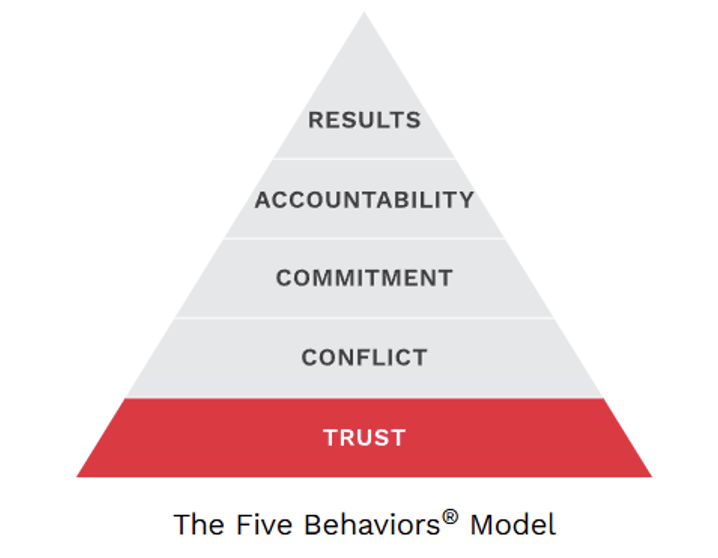
In my opinion, accountability sits near the top of Lencioni’s five-layer pyramid for a reason. It may be the difference between good teams and great ones.
A Simple Leadership Check This Week
Ask yourself honestly:
How public are our goals?
Is it clear who owns what?
Do peers hold one another accountable, or does everything funnel through me?
Where have I mistaken leniency for love?
Leadership is not about being liked.
It is about helping people become who God designed them to be.
And sometimes, the most loving thing you can do is have an uncomfortable conversation.
If this encouraged you, please forward it to a leader who is building a team right now. Accountability done right changes everything.
Stay steady.

Want more like this every week?
Order The Steady Leader Book: Order Book
God Bless!
~ Schuyler Williamson